Seattle Streets Alliance
Seattle’s 2027 Budget: Street Safety Wins and Challenges Ahead
- clara
- Nov. 24, 2026
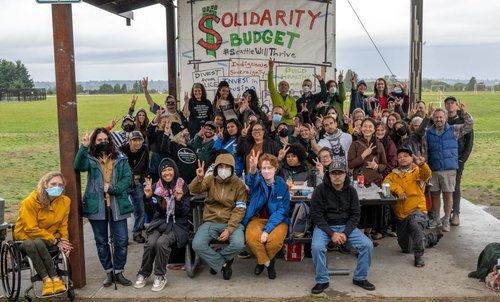
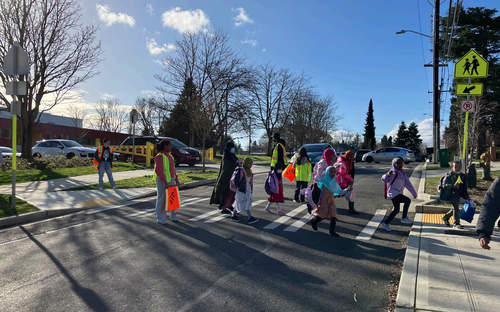
This fall, advocates like you rallied across Seattle, showing up at City Hall to speak at public budget hearings and writing to elected officials to push for a city budget that aligns with your values and priorities. And thanks to your advocacy, we saved more than a million dollars in Safe Routes to School funding to build more crosswalks, sidewalks, and traffic calming so that kids can safely walk and bike to school!
Last week, the City Council finalized the 2027-2028 Seattle City Budget. Here’s what you need to know:
Three Big Transportation Takeaways:
- WIN: No Cuts to Safe Routes to School!
We raised the alarm this fall, and you spoke up against a $1.25M cut to Safe Routes to School. Thanks to our advocacy, Budget Chair Dan Strauss protected the funding that builds safety improvements for kids walking and biking to school! This program is vital for families across Seattle and all road users. But the fight isn’t over yet: The fix is a one-time proviso, so we’ll keep pushing to fully fund Safe Routes to School next year. - Diverting Automated Enforcement Revenue Away from Street Safety:
The Mayor and City Council have been actively expanding the automated traffic enforcement camera program since 2024. As the number of tickets issued and the corresponding revenue increases, we were promised that funding would be reinvested into permanent infrastructure for safe streets to reduce traffic violence and create safe routes for all road users. But instead, that money is being siphoned away to backfill budget holes. We identified this issue in last year’s budget, and it has dramatically increased this year. Next year we will continue the fight to make sure all automated enforcement camera revenue goes towards physical street safety improvements. - Increase in City Council Pork Barrel Spending:
We are concerned that District-based council members have continued to earmark funding for specific local projects, which would otherwise not be prioritized by the Seattle Department of Transportation using their safety, equity, and mobility prioritization processes. These funds are not additive, and means that more worthy projects will have to wait additional years to be implemented or be cut all together. Council re-funded a $7M fund for councilmember-selected street projects for exactly this purpose, with new, additive funding rather than at the expense of higher priority projects.
Overall Budget Takeaways
The Mayor inherited a $175M budget shortfall and delivered a balanced budget. But with no new progressive revenue sources, that meant new cuts across every city department except the Seattle Police Department. However, the Seattle Department of Transportation (SDOT) came away with fewer cuts than some departments, and cuts were spread thinly across budgets to minimize impact on individual projects and deliverables.
We will continue to push for new progressive revenue sources to fix Seattle’s upside-down, regressive tax structure and end this cycle of austerity budgeting.
Thank you for your continued advocacy!
Stay connected with us to hear about upcoming opportunities to influence the issues you care about.
- Join us for a Community Happy Hour on Wednesday, Dec 9, 5:30-7:00 PM at Stoup Brewing on Capitol Hill.
- Get Involved with Seattle Streets Alliance by volunteering with us or donating to support our work!
- Learn more about the Seattle Solidarity Budget Coalition to collectively fight to oppose cuts, fund critical programs and services, and advocate for funding that helps build a Seattle where we can all live and thrive.